-
Imagination as a Resource
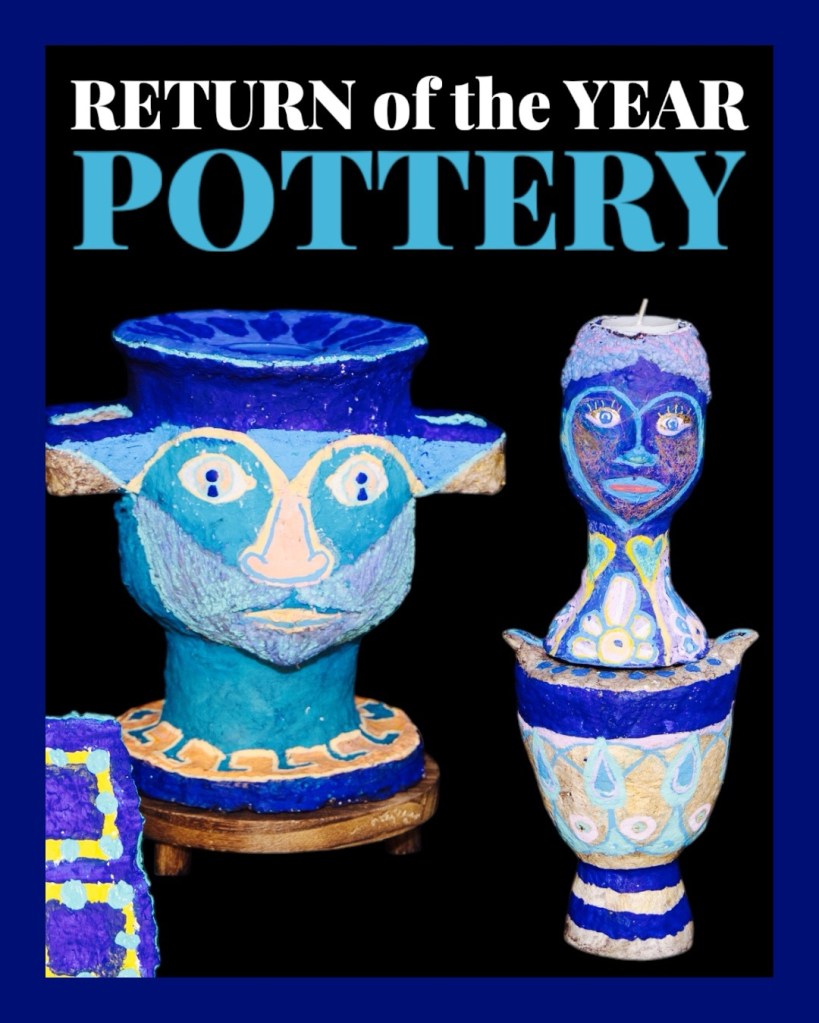
Over the past few months, I have been working on Renewal Through Heritage, a collection of sculptural vessels inspired by Mediterranean pottery traditions and constructed from reclaimed materials.
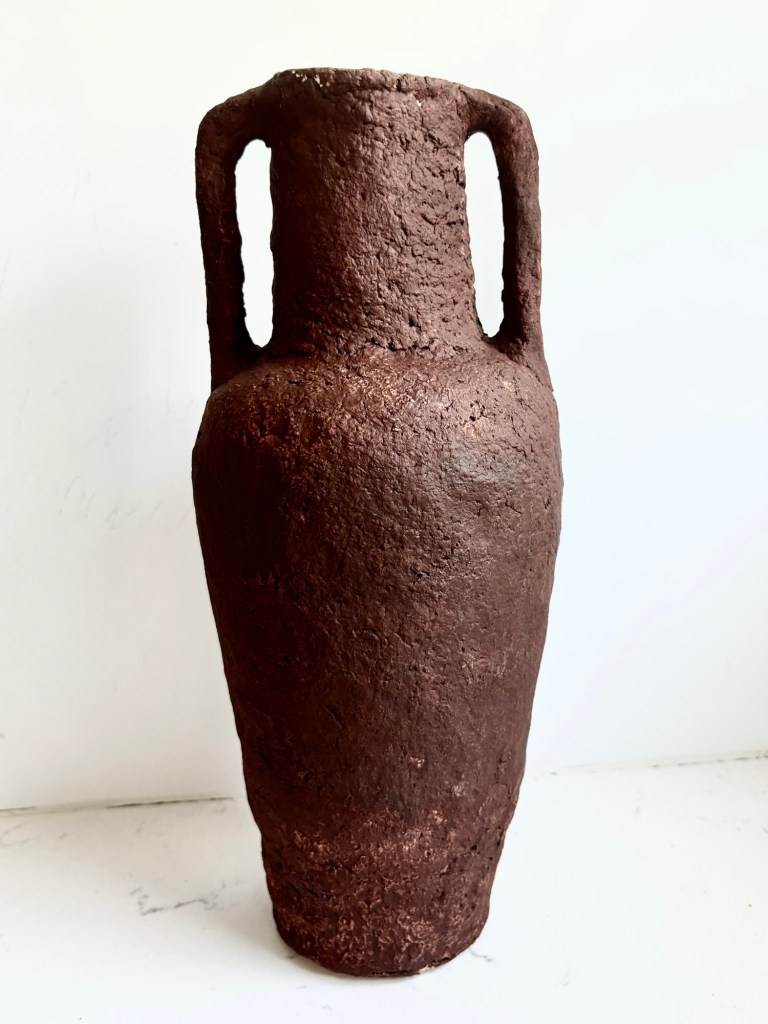
Heart Shape Vase: Terracotta 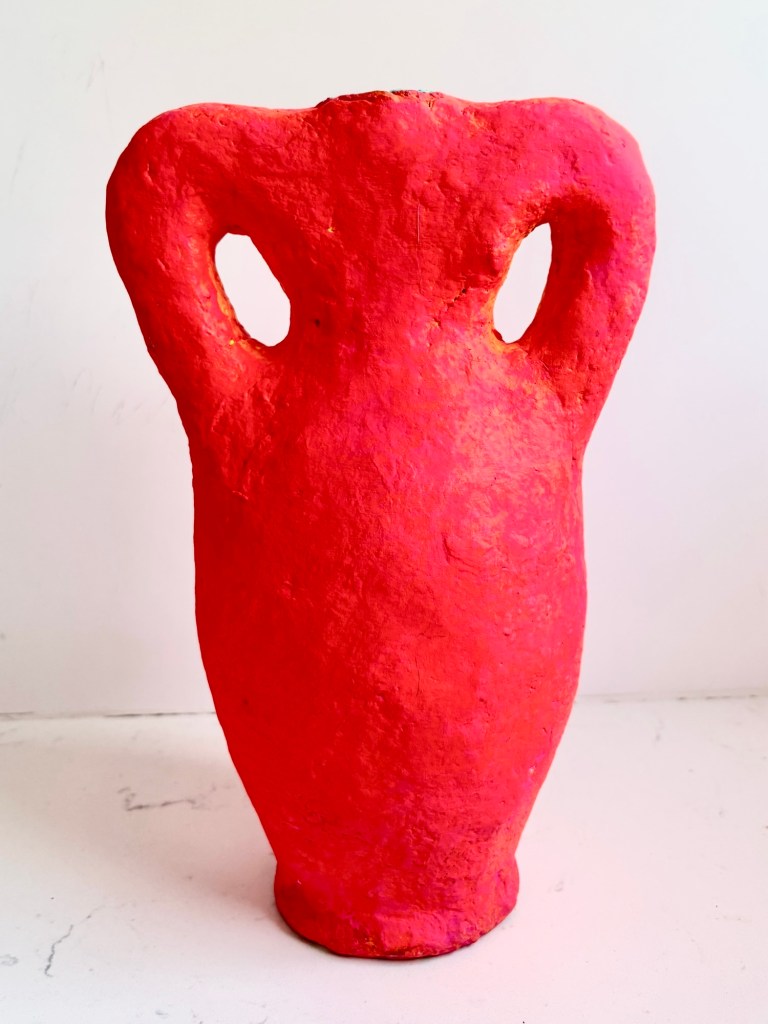
Heart Shape Vase: Neon 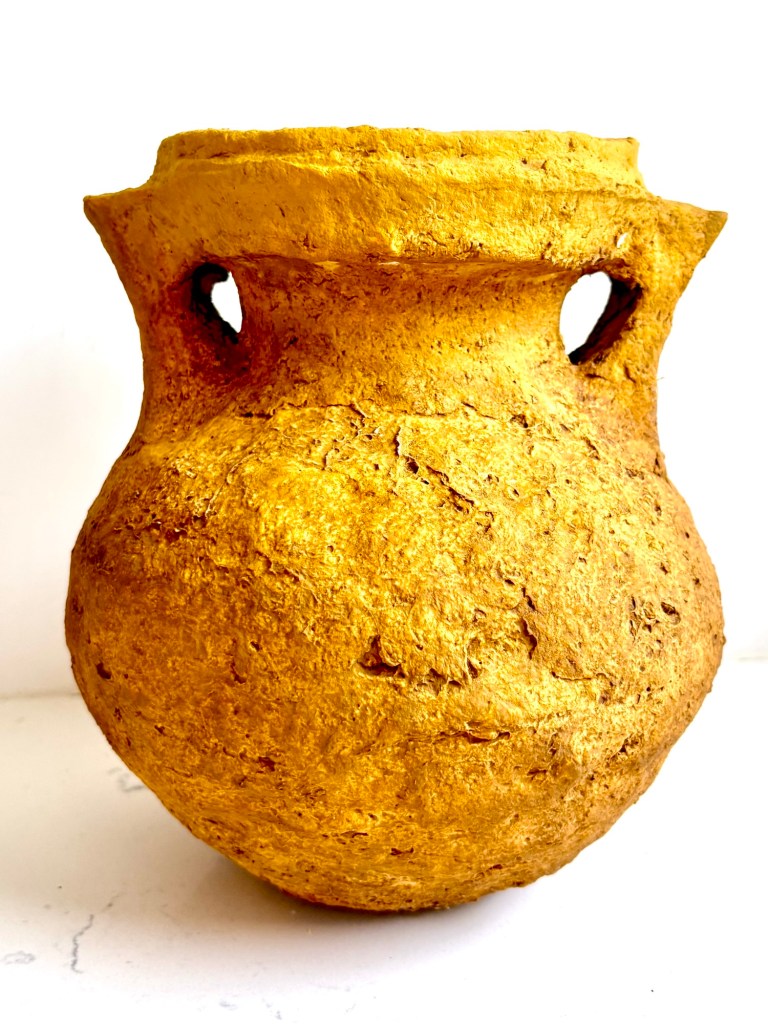
Heart Shape Candle: Ochre 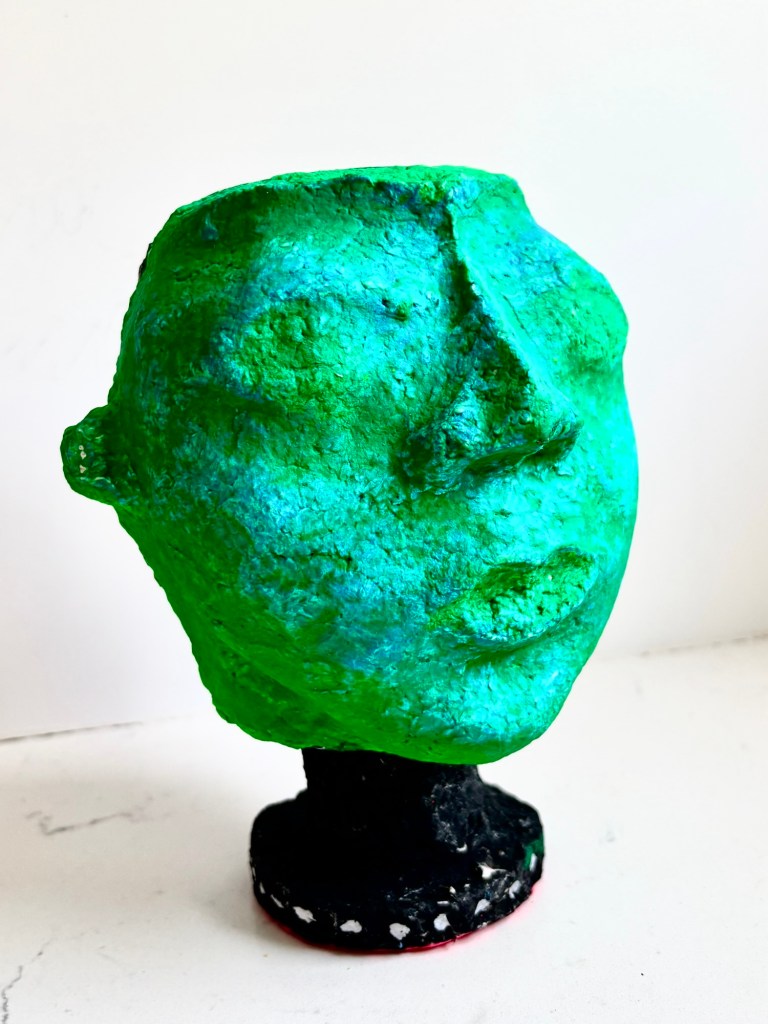
Ritual Vase: Neon As an artist and an early childhood educator, I often find inspiration in unexpected places. One of the greatest influences on this collection has been the children I work with every day.
During free play, children rarely worry about whether something is valuable, finished, or perfect. A piece of cardboard can become a castle, a boat, or a treasure chest. A small object can become whatever their imagination needs it to be. They are willing to experiment, change direction, and start over without seeing mistakes as failures.
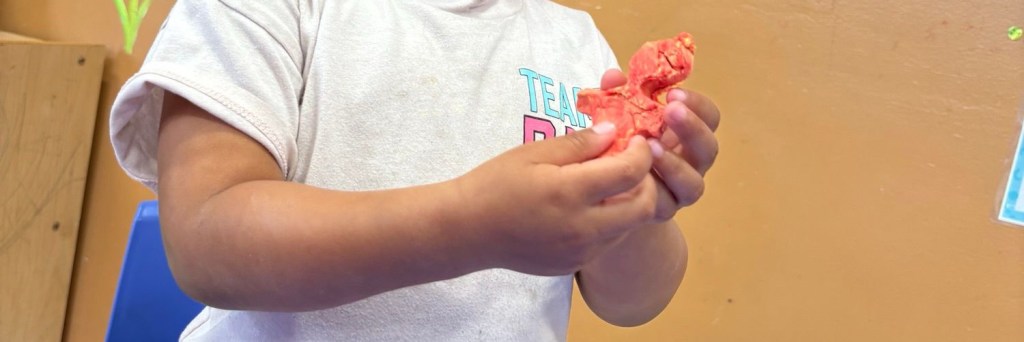
Watching this process has changed the way I think about materials and creativity. It has reminded me that value is not always found in what something is, but in what it can become.
That idea connects closely to Renewal Through Heritage. Using paper, cardboard, found objects, and glass jars, I transform discarded materials into contemporary vessels that explore memory, continuity, and transformation. Each piece carries traces of a previous life while taking on a new purpose.
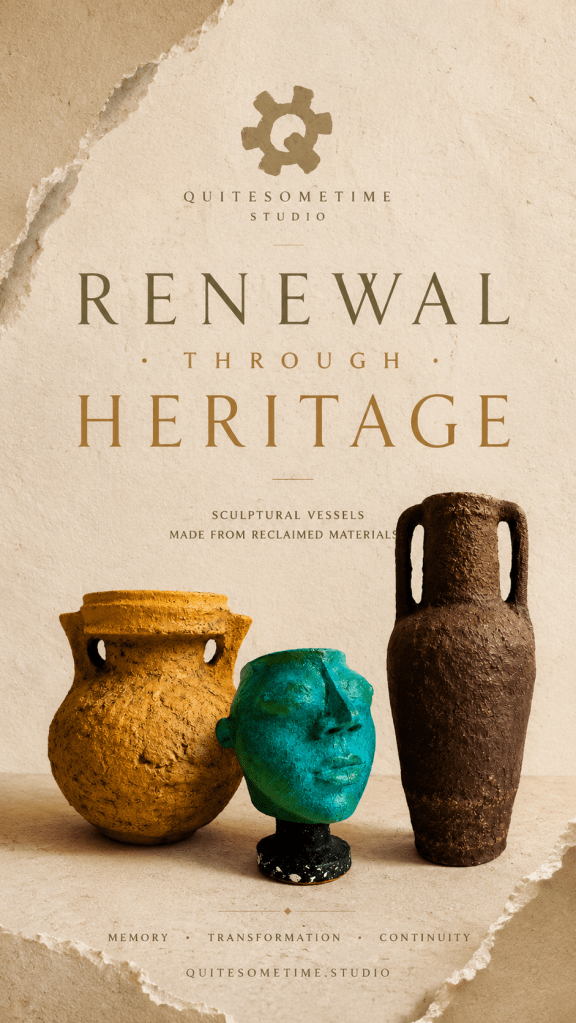
The idea of Re-Source resonates deeply with my practice. To me, a resource is not only a material waiting to be used, but also a story, a memory, a tradition, or a way of seeing the world. Inspired by ancient vessel forms that have carried goods, stories, and culture across generations, my work explores how renewal can emerge from what already surrounds us.
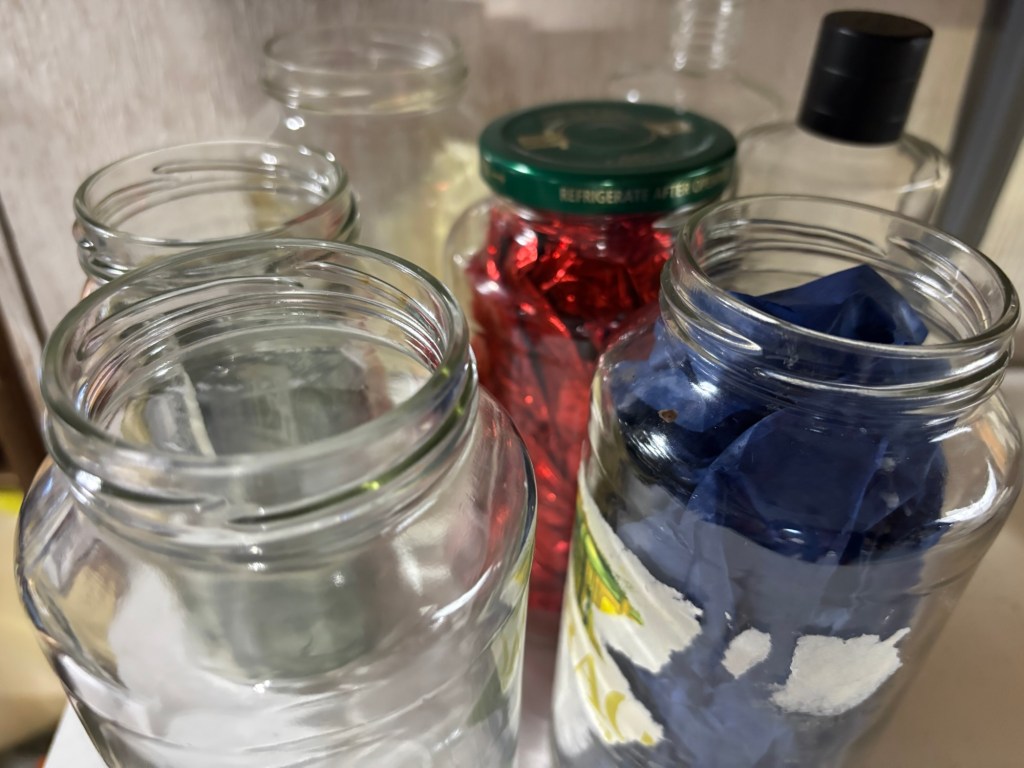
This collection was recently submitted for consideration in Re-Source, a juried exhibition organized by The HeArt Box Gallery. The exhibition celebrates creative reuse, ecological mindfulness, and transformation—ideas that are central to both my artistic practice and the lessons I continue to learn from the children around me
-
Day 5 in Daycare: Why Structure Is Not the Opposite of Care
By the fifth day in a daycare environment, the system becomes visible.
You learn the physical space.
You learn the rhythm of transitions.
You learn how time, not emotion, moves the day forward.
Names begin to settle, but routines settle faster.
And this becomes clear:
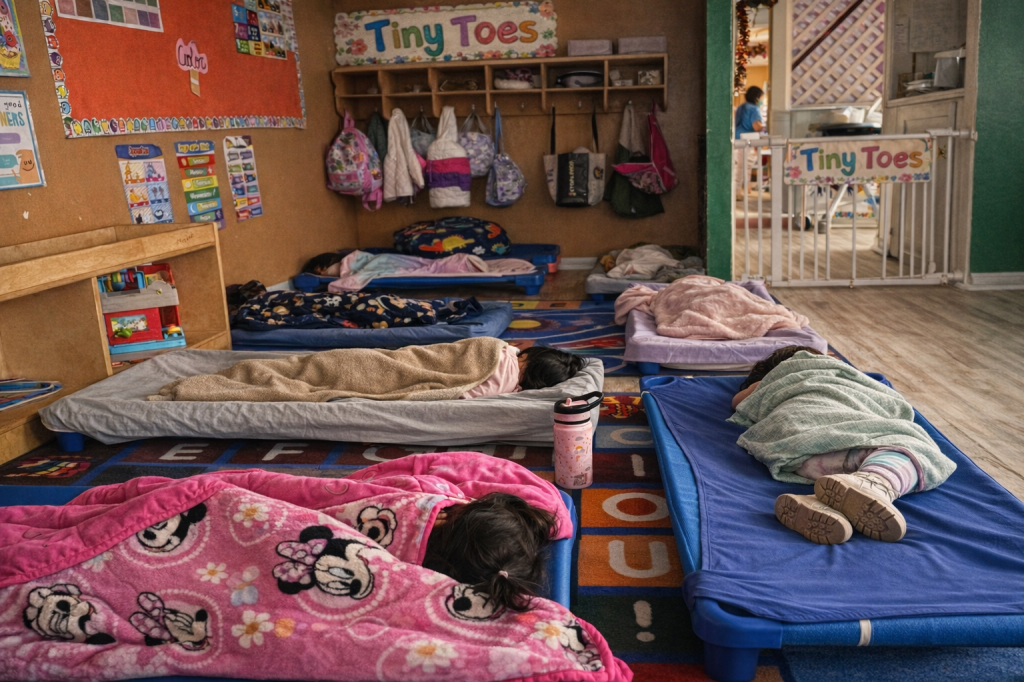
Daycare is not meant to function like a home.
It is meant to function like a system.
Daycare as a Community Environment
Early childhood settings are collective spaces.
They are designed for groups, not individuals.
Because of this, daycare cannot operate on negotiation or personal preference.
It operates on shared structure.
For toddlers and preschool-aged children, the most critical developmental need is not freedom, but predictability.
Bathroom routines Hand hygiene Meals Rest Waiting Lining up Cleaning up
These are not secondary tasks.
They are core developmental work.
Daycare exists to organize these rhythms in a consistent, repeatable way.
Reframing Discipline
In early childhood education, discipline is often misunderstood.
Discipline in daycare is not punishment.
It is consistency applied at scale.
Rules are not flexible based on mood or circumstance.
They do not change depending on class size.
One rule applies to:
one child
ten children
one hundred children
A rule is defined by time and sequence, not by individual readiness.
When it is time to eat, play ends.
When it is time to rest, bodies slow down.
When it is time to clean up, everyone participates.
This is not harshness.
This is environmental stability.
And stability is regulating for young children.
Appropriate Firmness in Early Childhood Settings
Yes, voices become firm at times.
Yes, choices are occasionally removed.
Yes, “no” is sometimes final.
This is developmentally appropriate.
Children at this age are learning:
bodily regulation personal care routines group behavior time-based transitions
These skills are not acquired through explanation alone.
They are learned through repetition, modeling, and clear limits.
Firmness in this context is not emotional distance —
it is clarity.
An Uncomfortable but Useful Comparison
There is a comparison educators often avoid:
Daycare can resemble training.
This comparison is uncomfortable because it sounds mechanical.
But training, in its true sense, is not dehumanizing.
Training is the process of moving from instinct to structure.
Children are not being controlled.
They are being prepared:
for school environments for shared public spaces for functioning within a community
Structure is not imposed to diminish children —
it is provided to support them.
Structure Enables Joy
One important truth often gets lost in these conversations:
Fun follows structure.
Once expectations are clear:
play becomes collaborative activities become accessible children feel safer exploring
Without structure, play escalates into chaos.
With structure, play becomes meaningful.
Daycare is not designed to entertain children.
It is designed to create the conditions in which joy can emerge.
A Reflection from Day 5
Being warm is easy.
Being kind is easy.
Running a daycare requires more than that.
It requires:
consistency clarity shared expectations a unified approach
Yes, this can feel strict.
But this kind of strictness does not harm — it reassures.
Children do not need constant choice.
They need reliable structure.
The rule is the rule.
The time is the time.
And once that foundation is in place —
children are free to enjoy themselves.
-
Bold Pumpkin Plan 🎃
Today I visited my son’s kindergarten for his 6th birthday read-aloud. I dressed as a farmer who had just harvested baby pumpkins. Each one I pulled from my bag got a few “oooh”s and “aaah”s—until the very last one! The “biggest” pumpkin wasn’t really big at all, but when I revealed it last, the surprise made the kids gasp and shout “Woooow!” A simple mind trick, but such a joyful moment. 🍂✨
The story time went well — the kids laughed, listened, and each received a tiny pumpkin to take home. When I got home, I finally got time to myself to clean my vision.
I also need a bold plan.
My plan isn’t clear.
The wheel is stuck —
and still, I smile.
I have not known how I would get that wheel out of the mud, yet,
But sooner or later, the sun will rise,
and the mud will dry.
Nothing is wrong.
I’m just here, riding it,
enjoying the moment like a cowgirl 🤠
Time is my only energy to heal,
like a mug warming your face during your routine.
.
-
🇹🇷 Rebuilding the Turkish Flag with Geometry
As a kindergarten mother, I’ve started to rediscover what’s around me — not just as objects, but as tools for learning. AI has become one of the biggest helpers on this journey.
Together with it, I’ve created this AI-assisted illustration on Adobe Illustrator. The centimeter and millimeter measurements in it are designed to help new learners understand how to use a compass and ruler — with a fine pen, a steady hand, and a little help from some erasers.
It’s a simple way to see that math and art can meet beautifully — through curiosity, patience, and a bit of play.
After exploring countless sources and official design archives online, I recreated the Turkish flag entirely from geometric proportions — just as defined in the original Turkish Flag Law. Every line and curve follows a mathematical rhythm: a 2:3 ratio, a crescent built from two perfect circles, and a star shaped by the golden ratio. This project became more than a design — it’s a bridge between geometry, symbolism, and national heritage.

💬 Comments are open for updates!
If you notice new findings, measurement details, or flag design variations from official or historic sources, feel free to share them below — I’ll keep refining this file with your input so it stays accurate and educational for everyone. -
Turning Waste into Wonder
My story begins in a trash bin—just like Oscar from Sesame Street. But instead of staying inside, I reach in, pull out forgotten things, and give them new life through art. My recycling art represents sustainability, turning waste into wonder.
Way to the exhibition I started making my recycling art in my basement in New Jersey, and now I send them to some of the most famous galleries in Manhattan.
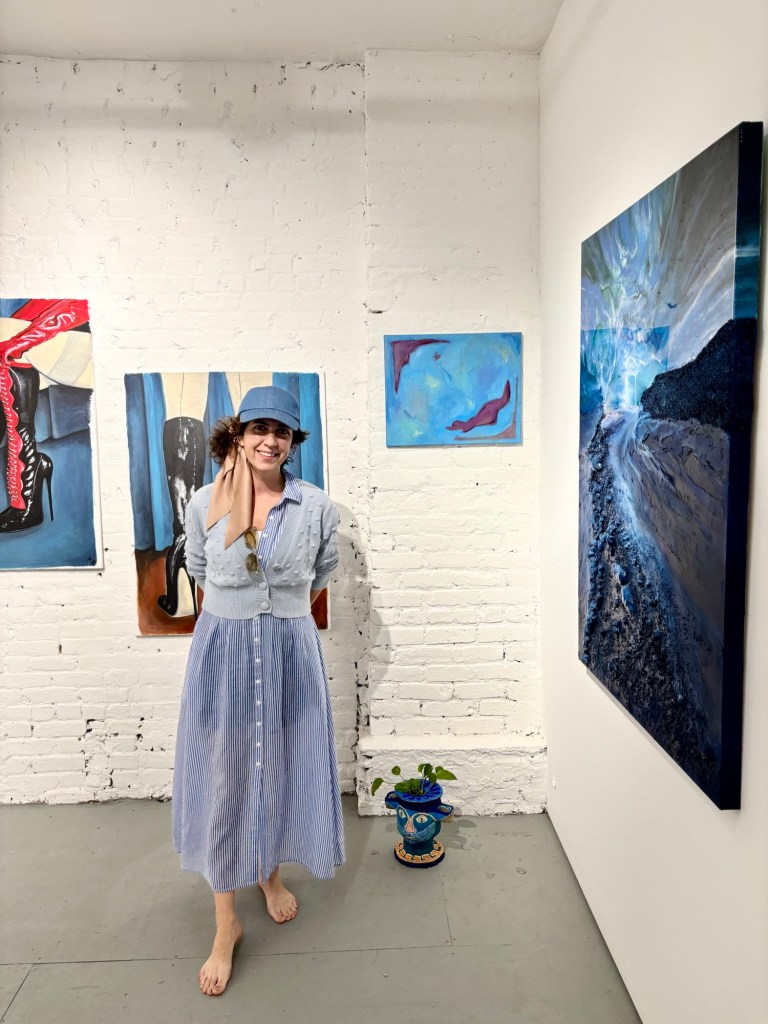
Sain Marks Art Gallery But before that, I felt blocked by everything around me.
There was no hope. No money. No support.
No time to practice, to grow, to be proud of what I made.
I looked at Instagram, full of brilliant, relentless artists, and thought:
What could I possibly say or do that hasn’t already been done?
It felt impossible—to build a life, a studio, a voice—from nothing.
But maybe there was a way.
In my basement, surrounded by forgotten hardware and recycling bins,
I began to see something in the overlooked—potential.
I had glue.
I had water.
I had discarded materials.
I had paint.
And I had my dreams.
It was time to bring them to life.
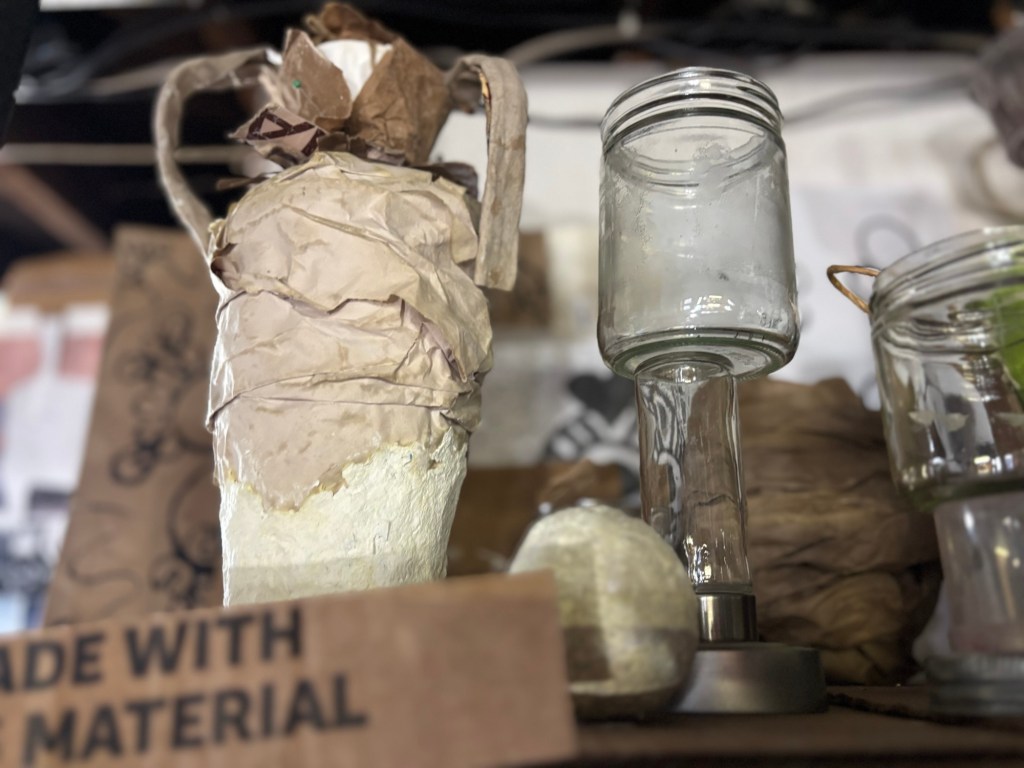
Basement Studio You don’t need a perfect studio or endless resources to begin.
Start with what you have—right where you are.
Trust your hands. Trust your vision.
What feels like nothing today might be the start of something real.
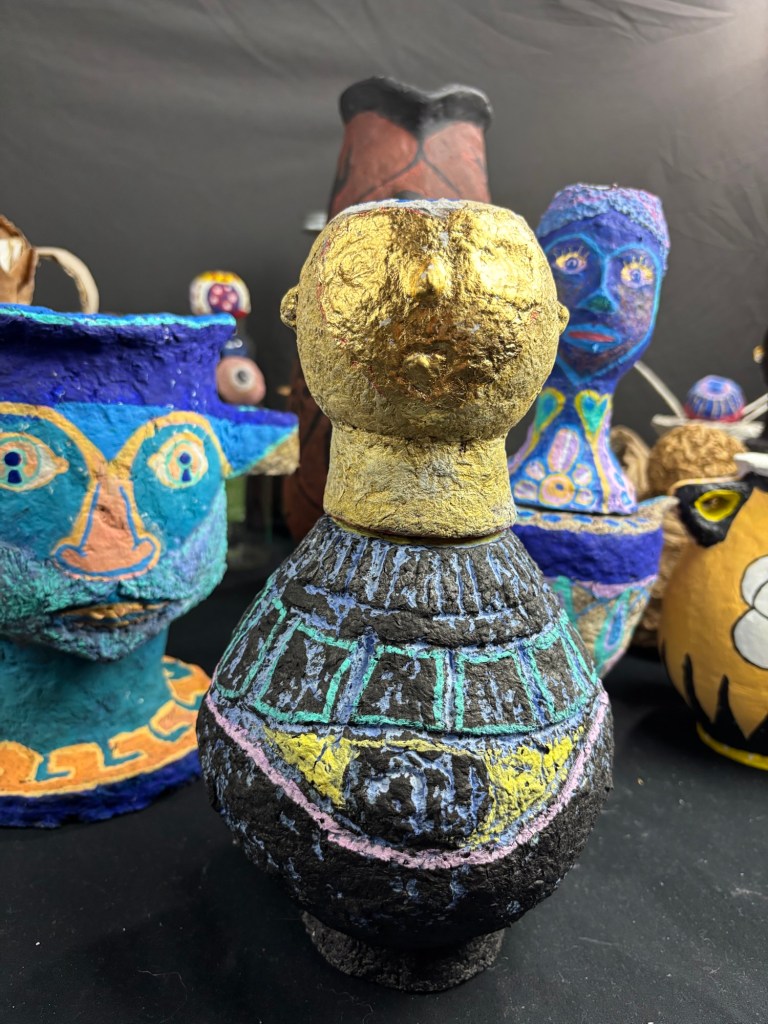
-
I am that cat
A black cat appeared in my backyard, thin, scared, and recently a mother. I watched her, curled up with her kittens, and saw myself in her—vulnerable yet strong, carrying the weight of responsibilities I didn’t ask for. Like the nameless cat in I Am a Cat, I often feel like an outsider, observing the world with cautious eyes. She, too, is hungry—not just for food, but for safety, peace, and connection. We share a silent understanding—two souls, both protective of what we love, despite the world’s indifference. I didn’t choose her, and she didn’t choose me, but somehow we found each other. And for now, that feels like enough.
-
Standin’ Nice and Tall
I am a new artist, and I feel a deep sense of relief in this new chapter of my life. As a 44-year-old artist, mother, and woman, I stand strong in my independence, embracing life as it is, and finding peace in knowing that I am enough. Through my work, I challenge norms, raise awareness about important issues, and inspire others to think critically about the world around them.
I am participating in the Artist as Activist exhibition with my recycled pottery works in Rowan University , inspired by ancient historic art. For this exhibition, I’ve created a special piece titled Standing Goddess (Kybele). This artwork symbolizes Kybele standing tall and strong, representing the rights of nature, children, and women. Through her powerful stance, she embodies resilience, protection, and the enduring spirit of the Earth.
When it comes to women’s rights, I often witness the injustice faced by women—those who carry immense responsibility but are not fairly appreciated, paid, or treated with the respect they deserve.
As today is also May Day, I honor the strength and resilience of all working women, especially those who bear the invisible weight of unpaid and underappreciated labor. My latest piece, Standing Nice and Tall, reimagines the ancient goddess Kybele as a powerful symbol of justice, standing firm for nature, children, and women’s rights. In her towering presence, she speaks to the millions who are still not treated fairly. I dedicate this work to the 100,000 women I dream of seeing rise in solidarity—just as one brave lefty did—under the hashtags #solak and #LeftyIsBack.
For more information about the exhibition and to view other works, please visit the Rowan University Art Gallery & Museum’s official website: https://sites.rowan.edu/artgallery/. You can also follow them on Instagram at @rowanuartgallery for updates and behind-the-scenes content.
-
Uzun İnce Bir Yoldayım
Uzun ince bir yoldayım
Gidiyorum gündüz gece
Bilmiyorum ne hâldeyim
Gidiyorum gündüz geceDünyaya geldiğim anda
Yürüdüm aynı zamanda
İki kapılı bir handa
Gidiyorum gündüz geceUykuda dahi yürüyom
Kalmaya sebep arıyom
Gidenleri hep görüyom
Gidiyorum gündüz geceKırk dokuz yıl bu yollarda
Ovada dağda çöllerde
Düşmüşem gurbet ellerde
Gidiyorum gündüz geceDüşünülürse derince
Irak görünür görünce
Yol bir dakka mikdarınca
Gidiyorum gündüz geceŞaşar Veysel işbu hâle
Gâh ağlaya gâhi güle
Yetişmek için menzile
Gidiyorum gündüz geceThank you for recreating this beautiful music and pouring all these emotions back into our hearts and souls.
-
The Shocking Truth About Household Waste in the U.S.
Every week, my son and I visit the Westfield Memorial Library in New Jersey to return our borrowed books. It’s a routine we both cherish, especially exploring the “Featured Shelf” together. The library’s children’s section is truly amazing, catering to ages 0-12 with a fantastic selection of books and seasonal programs. It’s not just a place for books but a hub for kids and nannies to socialize and learn. Spacious sections for child caregivers near iPad bars equipped with librarian-reviewed educational apps make it a wonderful environment for parenting insights and interactive learning.
This time, while my son delved into his favorite reads, I noticed the library’s recycling-themed picks—a thoughtful touch that aligns perfectly with my work as a recycling artisan. Among them, I discovered How Can We Reduce Household Waste by Mary K. Pratt, a book that made me reflect deeply on the staggering scale of waste we produce.
The Hidden Costs of Our Waste
Every year, the average American household generates an enormous amount of waste. The U.S. produces about 164 million tons annually (149 metric tons)—a figure so vast it’s hard to grasp. And this is just an estimate; some experts believe the real number could be up to seven times higher!
But what does this really mean in everyday terms?
Let’s break it down:
- The average American throws away about 4.5 pounds (2 kilograms) of waste each day.
- Only 1.5 pounds (0.7 kilograms) is recycled or composted.
- The remaining 3 pounds (1.4 kilograms) ends up as household trash, destined for landfills.
Paper Waste in Perspective
To help visualize, let’s focus on paper waste, one of the largest contributors:
- Every day, 148 million pounds of paper waste is discarded in the U.S.
- That’s equivalent to 99 libraries’ worth of books being thrown away daily.
- Over a year, this paper waste could fill 36,000 libraries—three times the total number of public libraries in the U.S.!
But what about personal impact?
- The average American generates enough paper waste in a lifetime to fill 1,800 library shelves with books or create a stack of books tall enough to rival the height of a 50-story building.
- If we compare it to toilet paper rolls, the paper waste from an average lifetime could unroll to cover the distance from New York City to Los Angeles—nearly 2,500 miles!
- For a family of four, their weekly paper waste is equal to two full family-sized packs of paper towels—thrown out instead of reused or recycled.
- Total daily waste in the U.S.: 10,125 football fields.
- Daily paper waste: 2,338 football fields.
- Non-recycled paper daily: 745 football fields.
Much of the paper waste can be recycled, but a large amount still goes to landfills daily, enough to fill nearly 745 football fields each day.

What’s in Our Waste?
Household waste isn’t just paper. It falls into four main categories:
- Paper, plastic, metal, and glass: Common materials often thrown away instead of recycled.
- Food and yard waste: Leftovers, fruit peels, and clippings that could become compost.
- Cleaning products: Empty bottles, packaging, and other residue from household cleaners.
- E-waste: Electronics like old phones and TVs, which often end up in landfills instead of being properly disposed of.

The Environmental Toll
The consequences of this waste are severe:
- Paper waste contributes to deforestation and increased carbon emissions.
- Overflowing landfills release methane, a potent greenhouse gas.
- Valuable materials are lost when we throw away items that could be recycled or repurposed.
What We Can Do
At QuiteSomeTime Studio, we believe waste can be reimagined. Instead of being discarded, it can become something beautiful and purposeful.
In our workshops, we:
- Transform paper into art through creative techniques like paper mache.
- Repurpose old materials such as jars, pottery, and glass.
- Spark conversations about sustainability, helping people rethink their habits.
A Library of Change
Our library visits remind me of the stories books hold—and the untold story our trash tells about our habits. If every piece of paper waste were transformed into a book, we’d have an immense library. Imagine if instead of throwing away two family-sized packs of paper towels each week, a family turned that waste into something meaningful.

Let’s rewrite our waste story together. By taking small steps—like recycling, reusing, and repurposing—we can make a significant difference. Each piece of trash can become an opportunity, and each action can help build a more sustainable future.

The Weight of Waste: Turning Overwhelming Numbers into Hope
When I first came across the staggering statistics about waste in the U.S. — the equivalent of 10,125 football fields of daily trash — it felt heavy. It was hard to imagine how we could make a dent when only a fraction of that waste is recycled. The numbers can feel defeating, and honestly, at times, it’s easy to feel disheartened by how much still ends up in landfills.
But in those moments of feeling overwhelmed, I remind myself that every little action counts. The work I do with recycled materials may feel small compared to the mountains of waste, but it’s a part of something bigger. Each object I transform, each person I reach with my message of sustainability, is a step in the right direction. We may not solve the entire problem overnight, but we’re creating ripples of change that, together, can make a significant impact.
So, while it’s easy to be discouraged by the vastness of the problem, I choose to focus on the beauty we can create.
-
The Art of Renewal: Transforming Household Waste into Beauty
At QuiteSomeTime Studio, we see waste differently. Every item thrown away carries a story, a purpose waiting to be rediscovered. By transforming discarded materials into pottery, sculptures, and other creations, we aim to change how people think about their waste before they get rid of it.
The average American throws away about 4.5 pounds (2 kilograms) of waste daily. Out of this, only 1.5 pounds (0.7 kilograms) gets recycled or composted, while the remaining 3 pounds (1.4 kilograms) becomes household waste. This waste falls into four basic categories: recyclable materials like paper, plastic, glass, and metal; food and yard waste; cleaning products; and e-waste, such as old phones and TVs. Every category offers opportunities to reduce waste and rethink its purpose.
At our studio, we’re inspired by these possibilities. Broken ceramics, used papers, and even cardboard boxes become the foundations of our creative work. Each piece we create—a vase, a sculpture, a decorative plate—is more than an object. It’s a message: before you throw something away, consider its potential for renewal.
This philosophy is at the heart of our workshops, where we teach others to transform household waste into meaningful art. By involving people in the creative process, we help them see that waste isn’t just trash—it’s material with untapped value. Imagine if every person could rethink just one item a day. Together, we could make a profound impact, reducing the environmental harm of the 164 million tons of waste Americans generate annually.
Creativity is a powerful tool for change. Through our recycled pottery and sustainable art, we hope to inspire people to pause and ask: Can this be reused? Could it tell a new story? At QuiteSomeTime Studio, we’re building a movement where waste becomes a second chance, and every discarded object holds the promise of transformation.
What’s one item you’ve saved from the trash and turned into something meaningful? Share your stories with us—together, we can turn waste into wonder!
The data used in this post is sourced from Mary K. Pratt’s book How Can We Reduce Household Waste (Lerner).
Natali Stoiyanna Elmasoglu
My life as a recycling artisan

